

Almanac
Every day, as the ancients counted it.
An iPhone app that names any day from 10,000 BC to AD 3000 the way the Maya, the Egyptians and the astronomers of China and Islam counted it, and shows when more than fifty ancient sites line up with the sun, the moon and the stars.
Coming soon to the App Store.
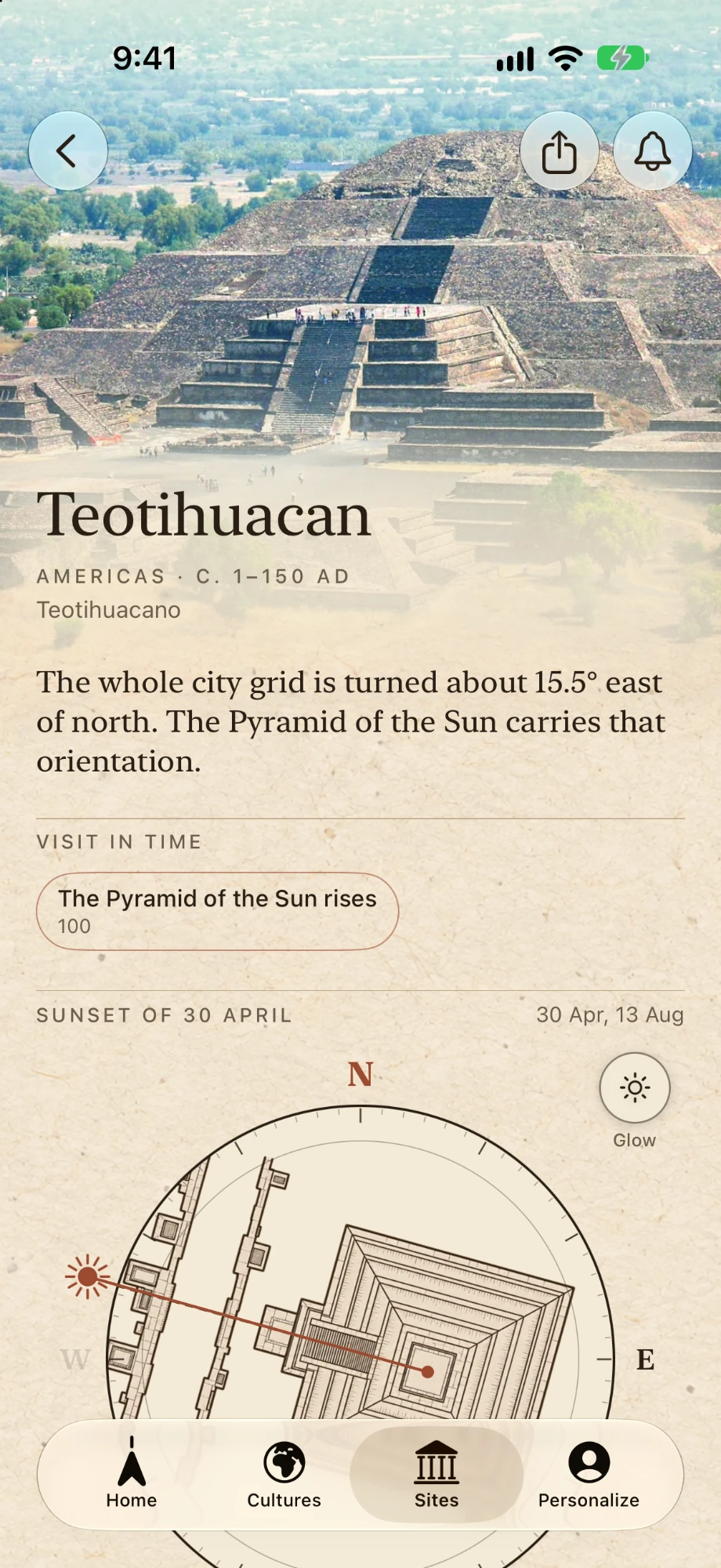
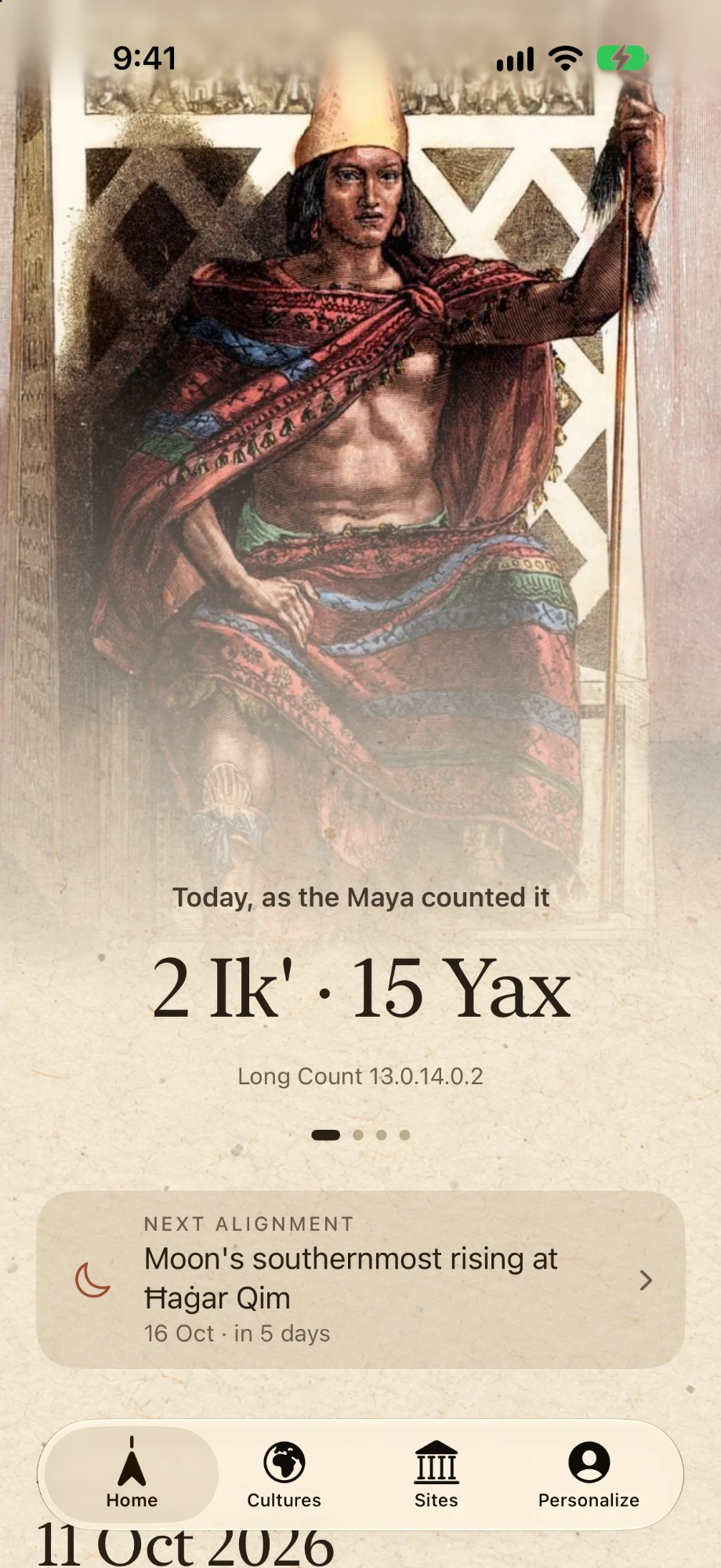
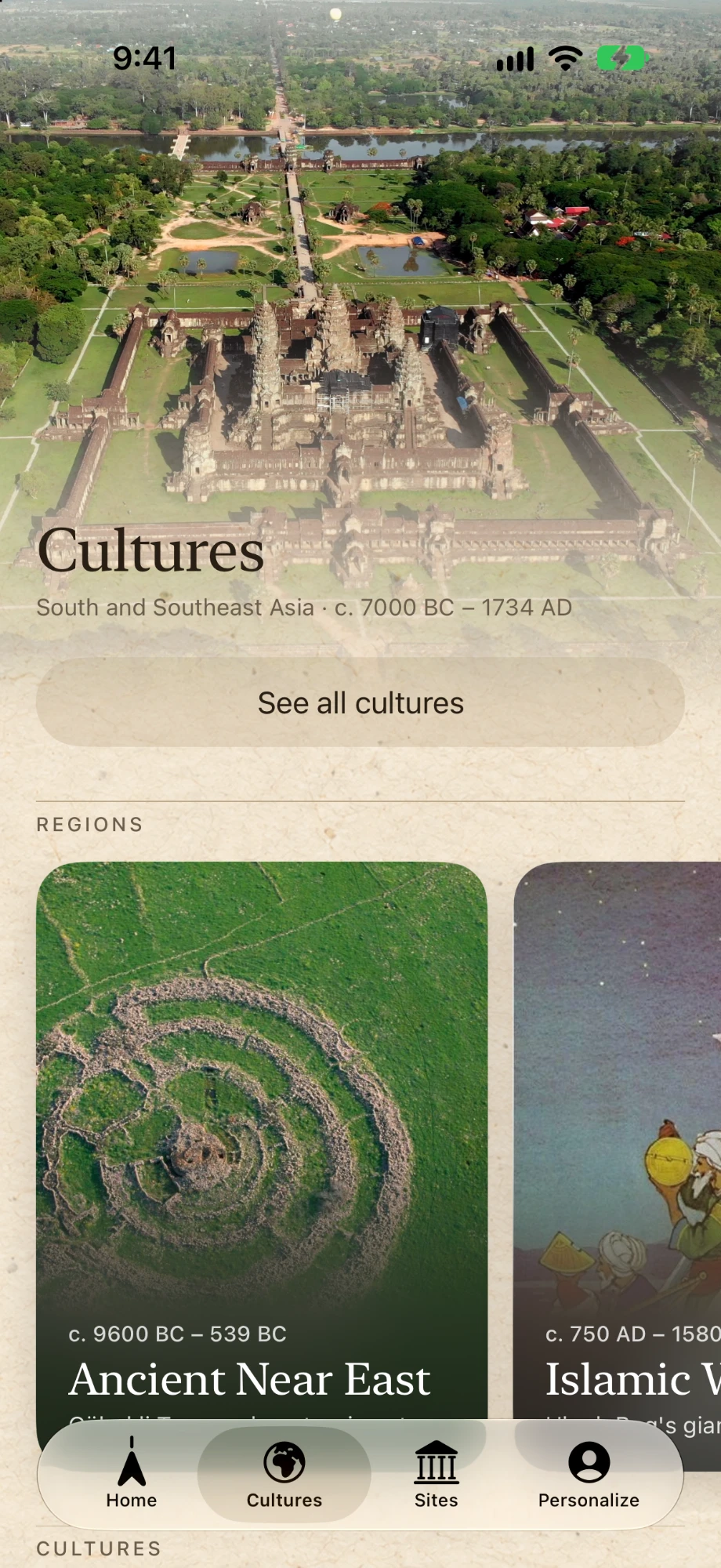
Ancient calendars and the sky they were built to follow. Almanac names any day in four of them, calculated on the iPhone from published astronomy, and shows the moments when old stones still line up with the sun.
Get the highlights.
-
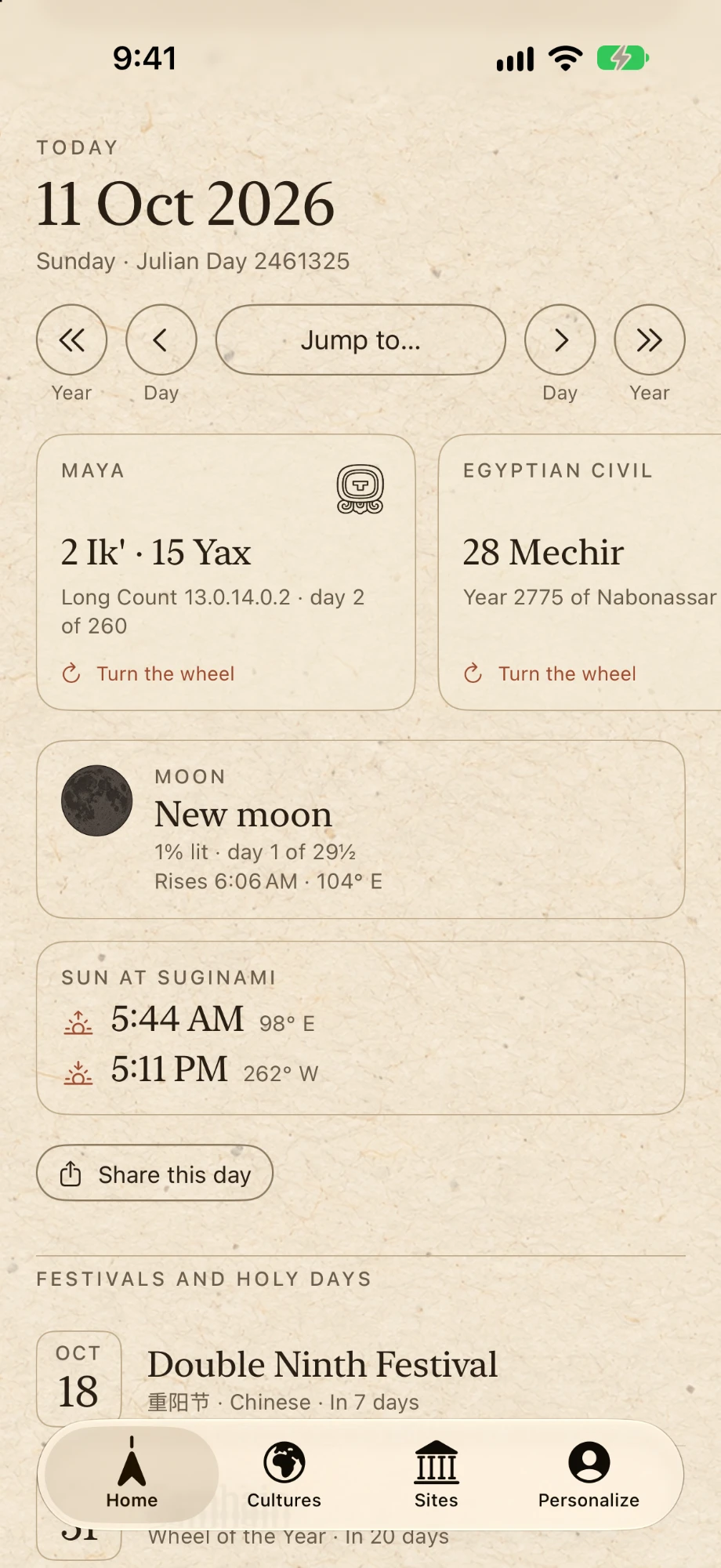
Turn the wheels of time. Spin the Maya, Egyptian, Islamic and Chinese calendar wheels with a finger and watch the days go round.
-
Where stone meets sky. Drag through the hours and watch the sun cross each plan into line, on a compass that turns with the iPhone.
-
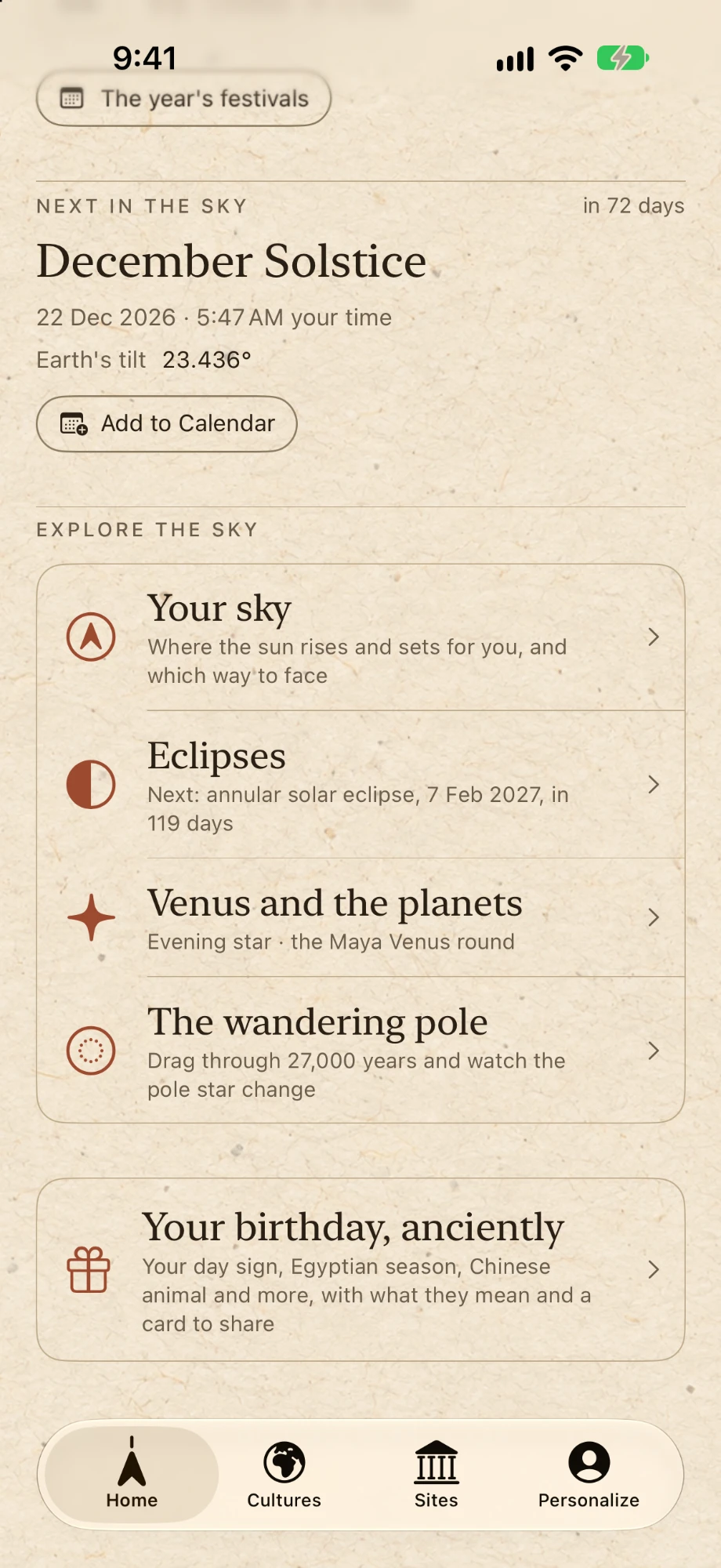
Every eclipse, on the moon wheel. Solar and lunar eclipses, with what you can see of each from where you are.
-
Today, as the ancients counted it. One date, written the way four civilizations would have written it.
Made for iPhone Duo.
Open it, and the day’s artwork fills one half while the calendars and sites fill the other. Closed, Almanac fits the cover screen, with its tabs down the side.
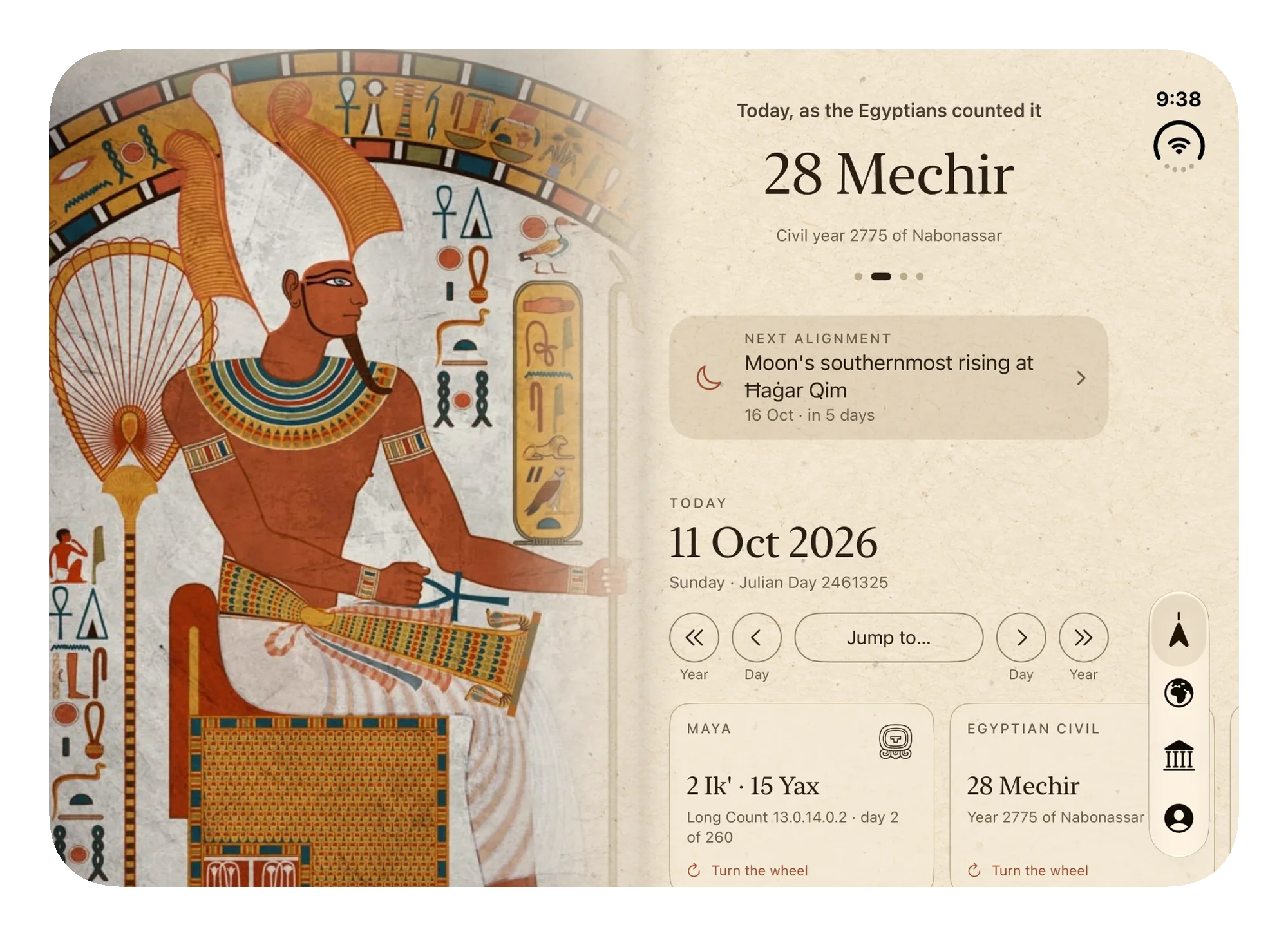
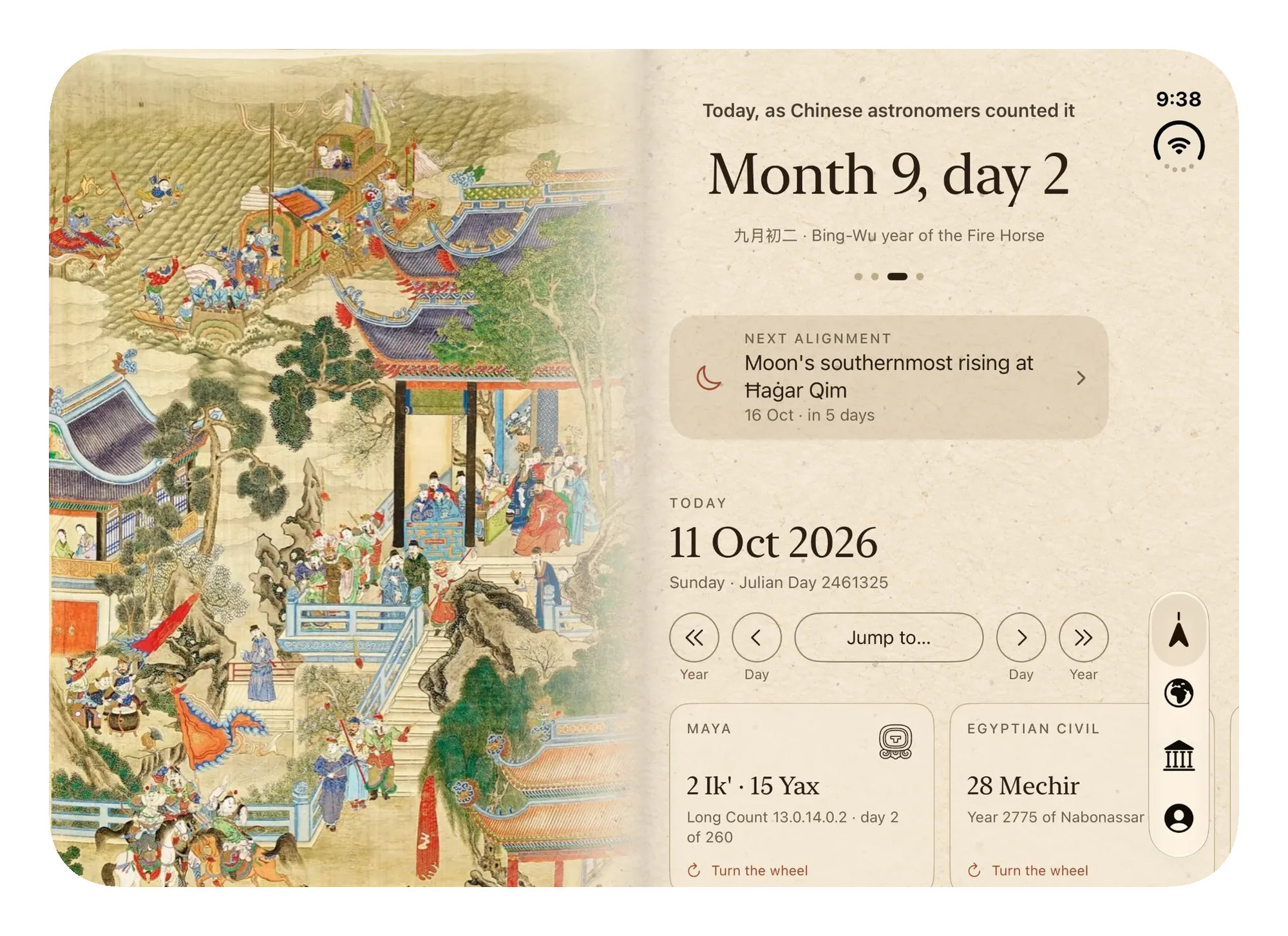
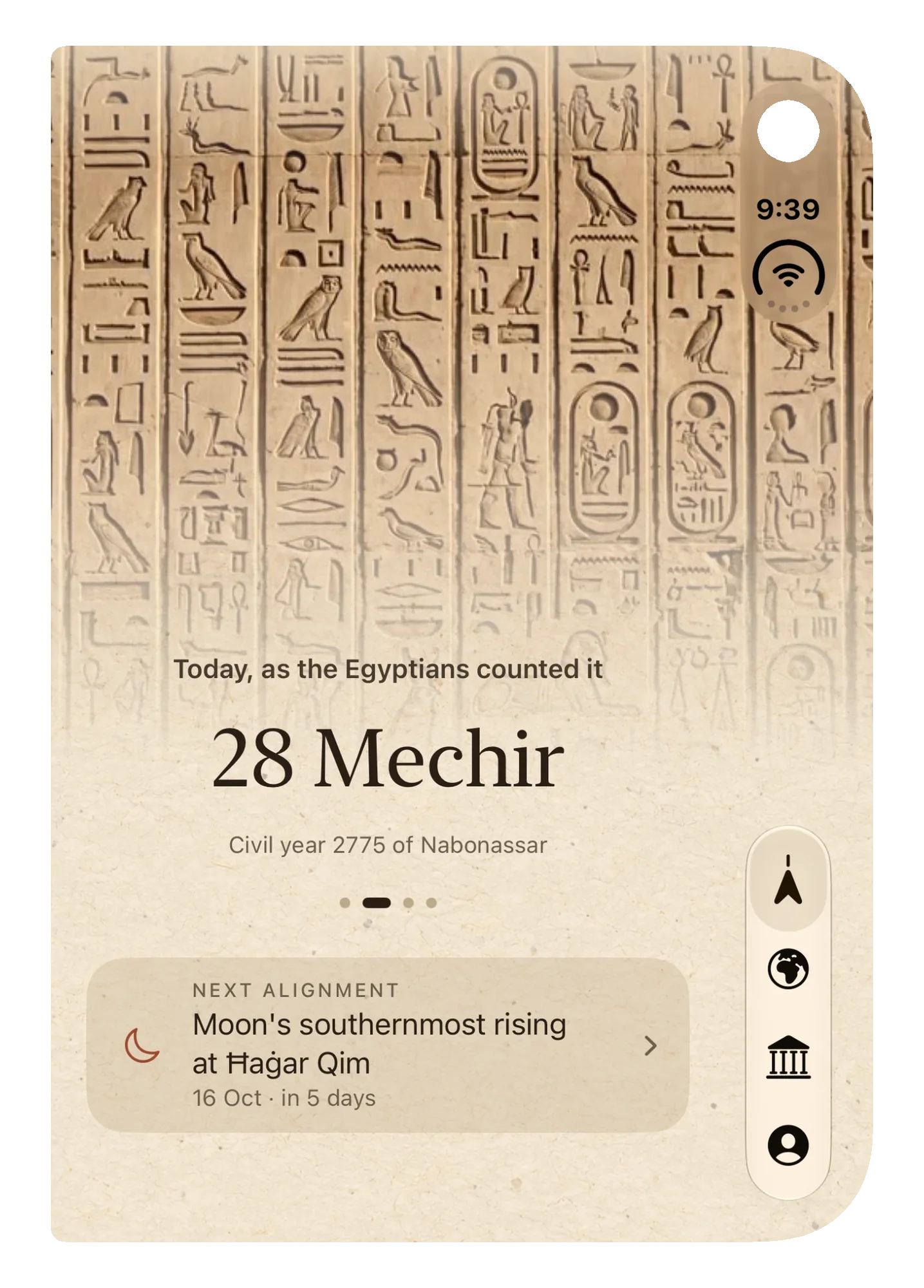
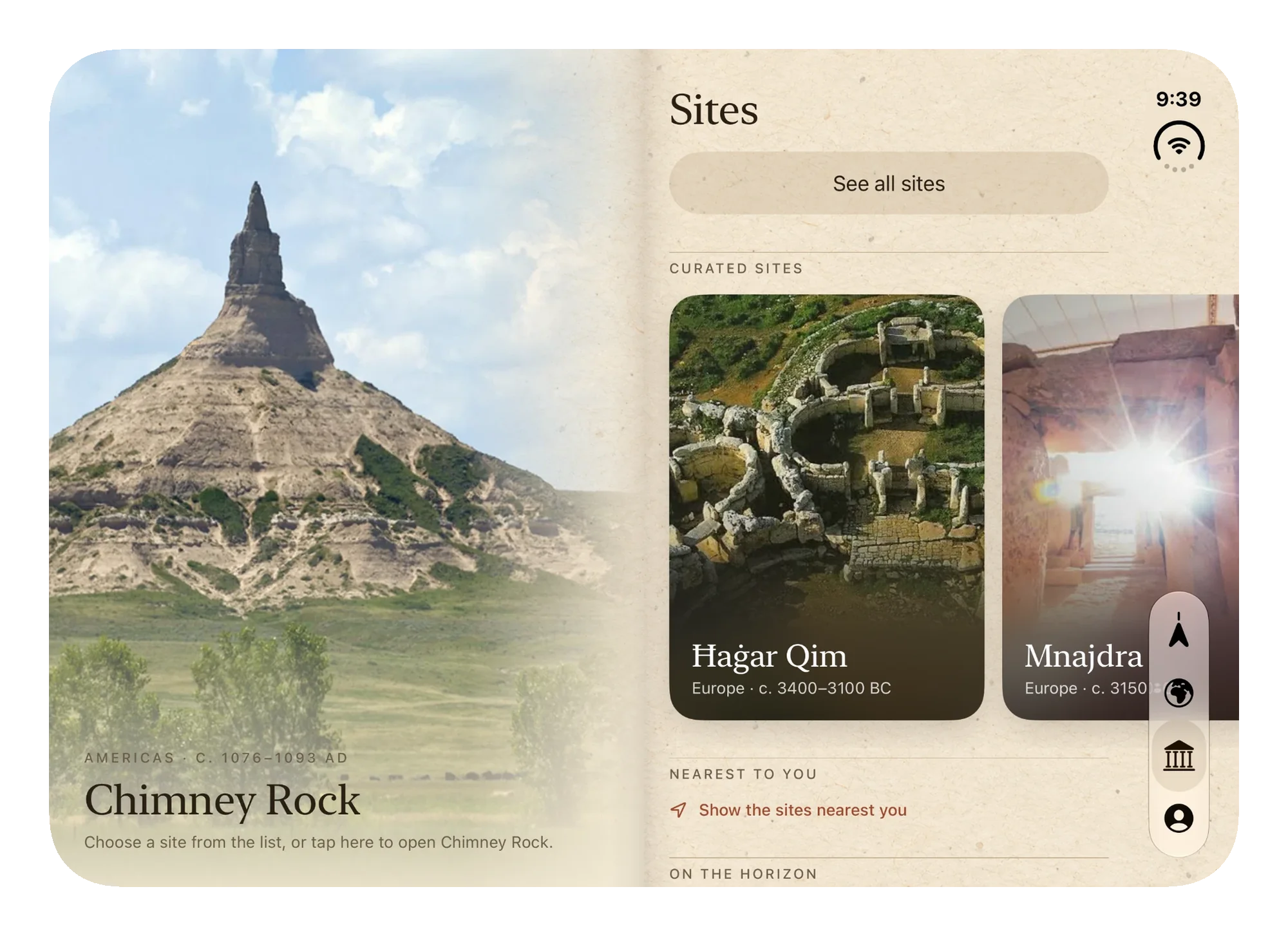
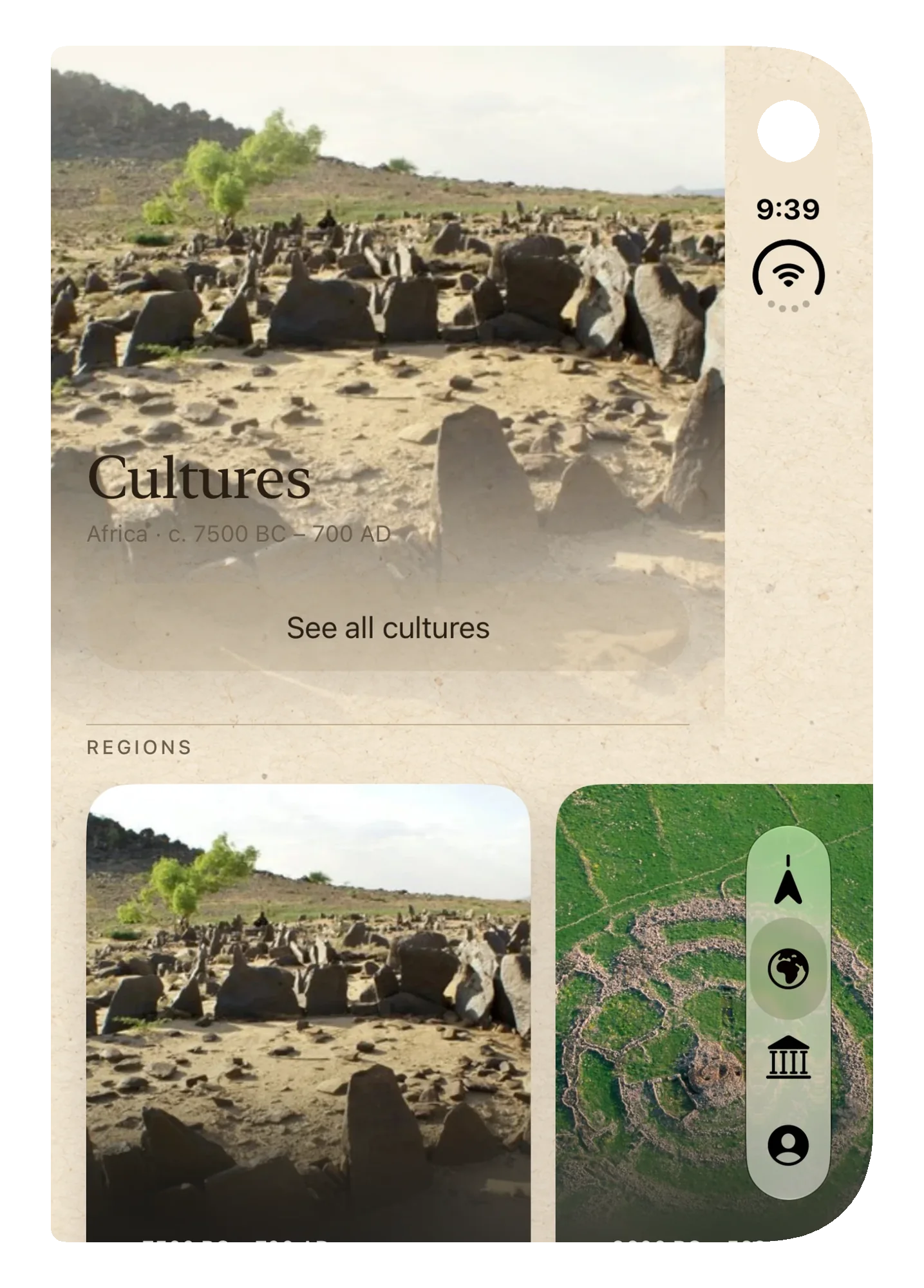
Made to be explored.
Everything the app does, at a glance.
Four calendars. Maya, Egyptian, Islamic and Chinese. Type a date into any of them, from 13.0.0.0.0 to 1 Thoth or 1 Muharram.
More than fifty ancient sites. Stonehenge, Newgrange, Giza, Chichén Itzá, Teotihuacan, Ħaġar Qim and more, from Göbekli Tepe to Machu Picchu.
A compass that turns with you. Each site’s plan sits on a compass that turns with the iPhone.
The sky above you. Where the sun rises and sets for you at the solstices and equinoxes.
Every eclipse. Solar and lunar, with what you can see of each from where you are.
Your birthday, anciently. Day sign, season and animal, plus Hijri, Hebrew and Indian dates, to share as a card.
Reminders. Follow a site to be reminded before its next alignment.
Widgets. A calendar wheel, an ancient site or a sky compass on the Home Screen.
Shown with its sources. Tap “Show the math” on any alignment to see where it comes from, starting with Jean Meeus’s Astronomical Algorithms.
Private by design. Everything is calculated on the iPhone and works offline. No account, ads, analytics or tracking.
Works offline. No connection needed to turn a wheel, find an eclipse or check an alignment.
Thirteen thousand years. From 10,000 BC to AD 3000, in every calendar.
Take a closer look.
A warm paper ground, dark ink and a single terracotta accent carry every screen.
Names and dates are set in a serif; labels in spaced small capitals.
The twenty Maya day signs ring the Tzolk’in wheel and return on the birthday card.
The calendar wheel icon in light and dark, and two monochrome versions for tinted Home Screens.
Drag a wheel and the days go round under your finger.
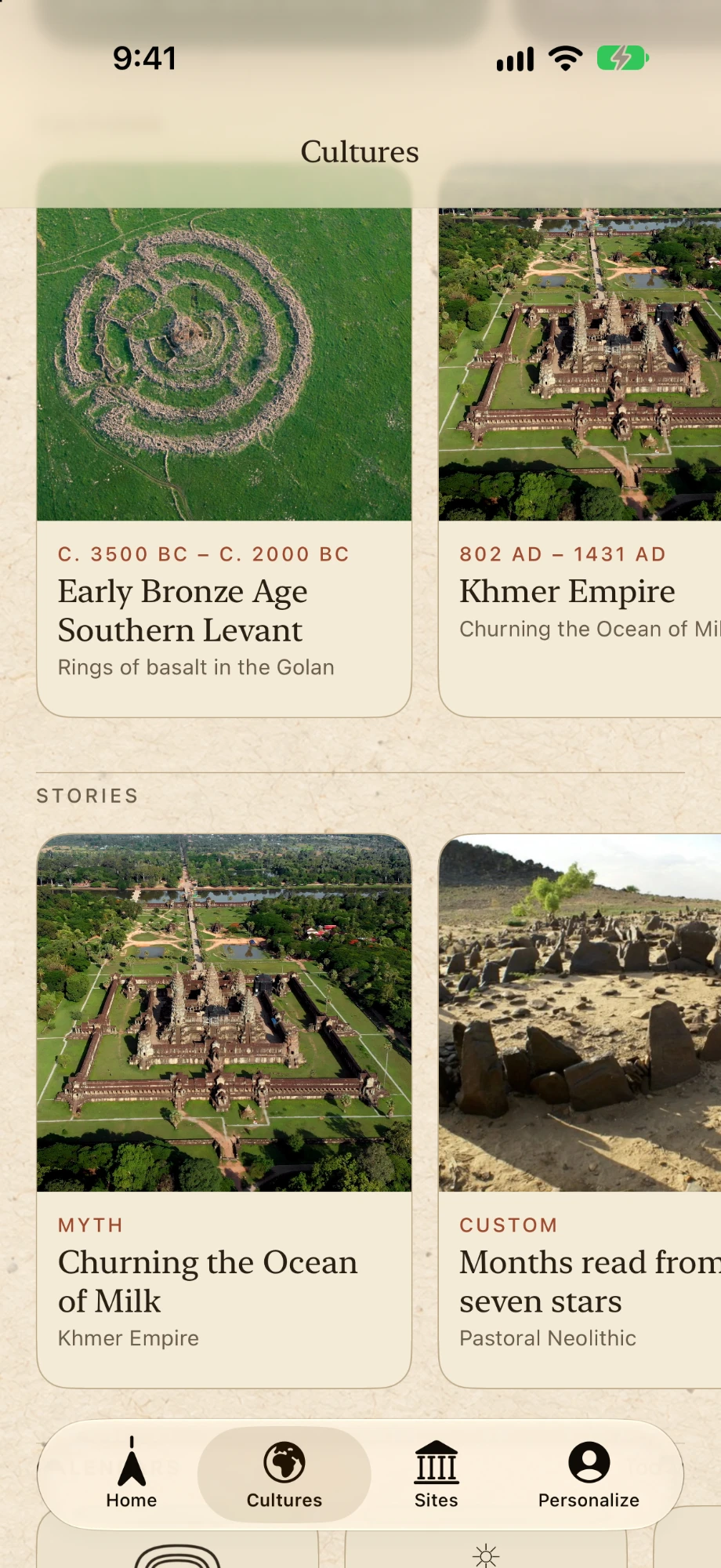
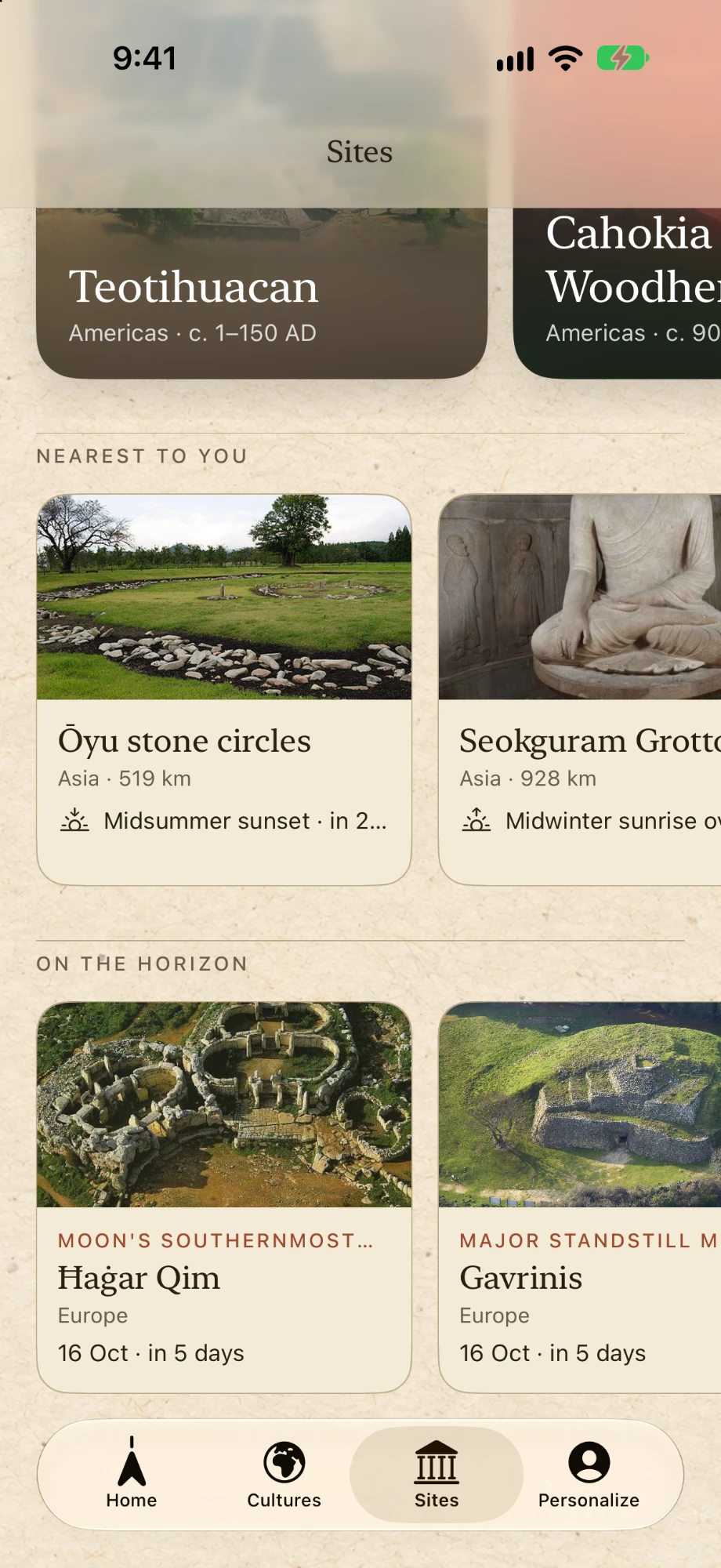


Where stone meets sky.
Stonehenge, Newgrange, Giza and Chichén Itzá were built to catch the sun. Drag through the hours and watch it cross each plan into line.
Sites
Stonehenge, Newgrange, Giza, Chichén Itzá, Göbekli Tepe and Machu Picchu, among more than fifty.
On a compass
Each plan turns with the iPhone, so the stones line up with the real horizon.
Show the math
Every alignment can show its working, from Jean Meeus’s Astronomical Algorithms onwards.
From sketch to screen.
The studies behind the app: sketches, wireframes, type, color and the icon.
Tech specs
- Platform
- iPhone, including iPhone Duo open or closed
- Availability
- Coming soon to the App Store
- Calendars
- Maya (Long Count, Tzolk’in and Haab’), Egyptian civil, Islamic (Hijri) and Chinese lunisolar; Hebrew and Indian dates on birthday cards
- Range
- 10,000 BC to AD 3000
- Sites
- More than fifty, from Göbekli Tepe to Machu Picchu, each with its alignments
- Sky
- Sunrise and sunset at the solstices and equinoxes; every solar and lunar eclipse
- Widgets
- Calendar wheel, ancient site, sky compass
- Privacy
- Calculated on the device and works offline. No account, ads, analytics or tracking; no personal data collected
- Sources
- Published astronomy, from Jean Meeus’s Astronomical Algorithms onwards