2025 · Interaction experiments
Pointing, window snapping and fish-tank VR
Three focused studies of established HCI problems: Fitts’ law across three input devices, physics-based window snapping, and head-coupled perspective from a webcam.
The first two began in UNIST’s Advanced Human–Computer Interaction course in 2025.
Pointing Fitts’ law, three ways
A mouse, a Wacom Cintiq Pro stylus and an iPad operated with a mouse, on WebFitts tasks at three amplitudes (200, 400 and 800 px) and three widths (40, 80 and 160 px), 11 targets per condition, one session per device.
Throughput in bits per second. Higher is better.
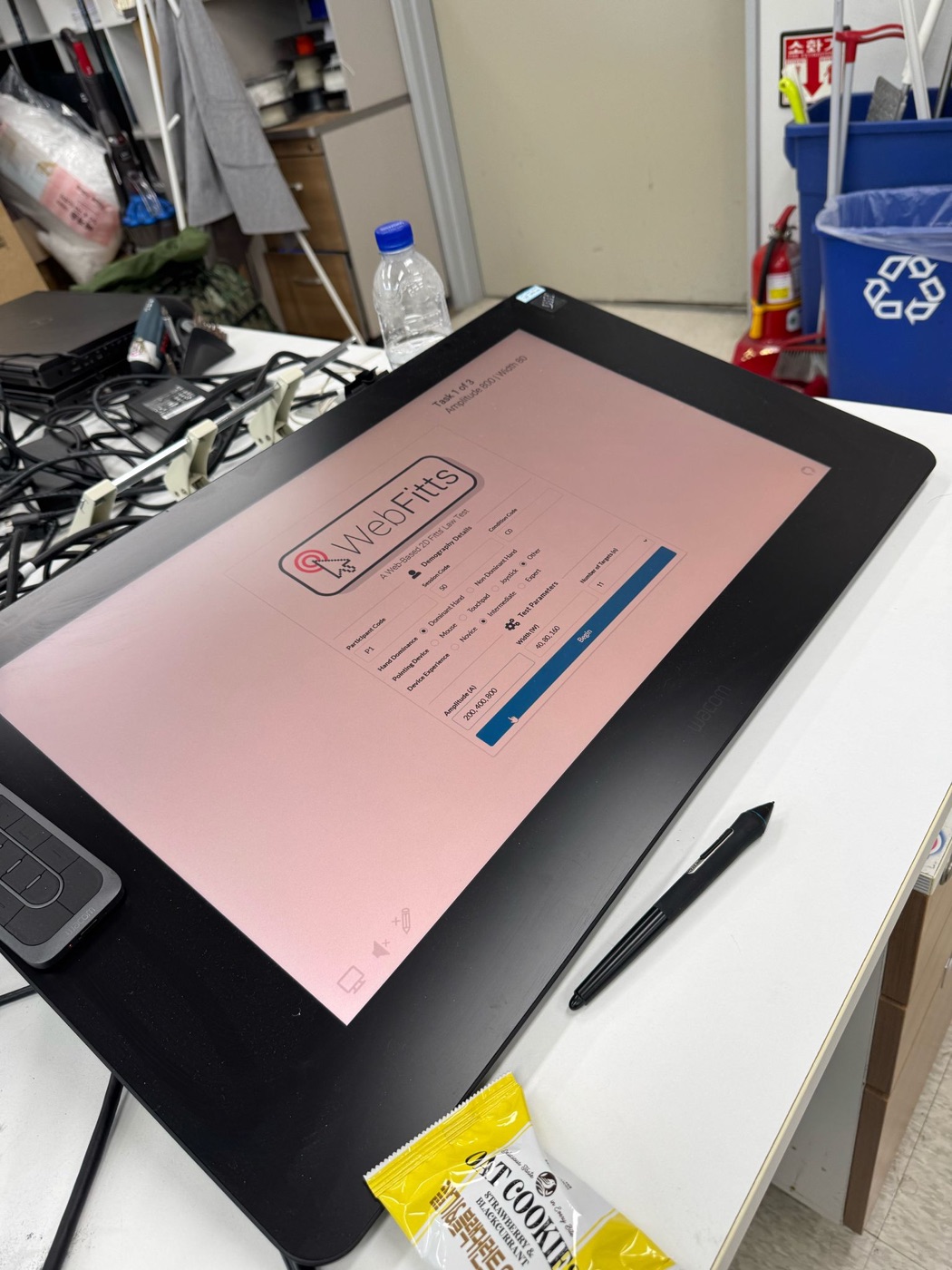
The mouse was fastest and most accurate. The stylus was held back by misclicks and calibration offsets, and the iPad had the lowest throughput, with limited pointer control within apps. Both missed about one target in ten.
Technique Physics-based window snapping
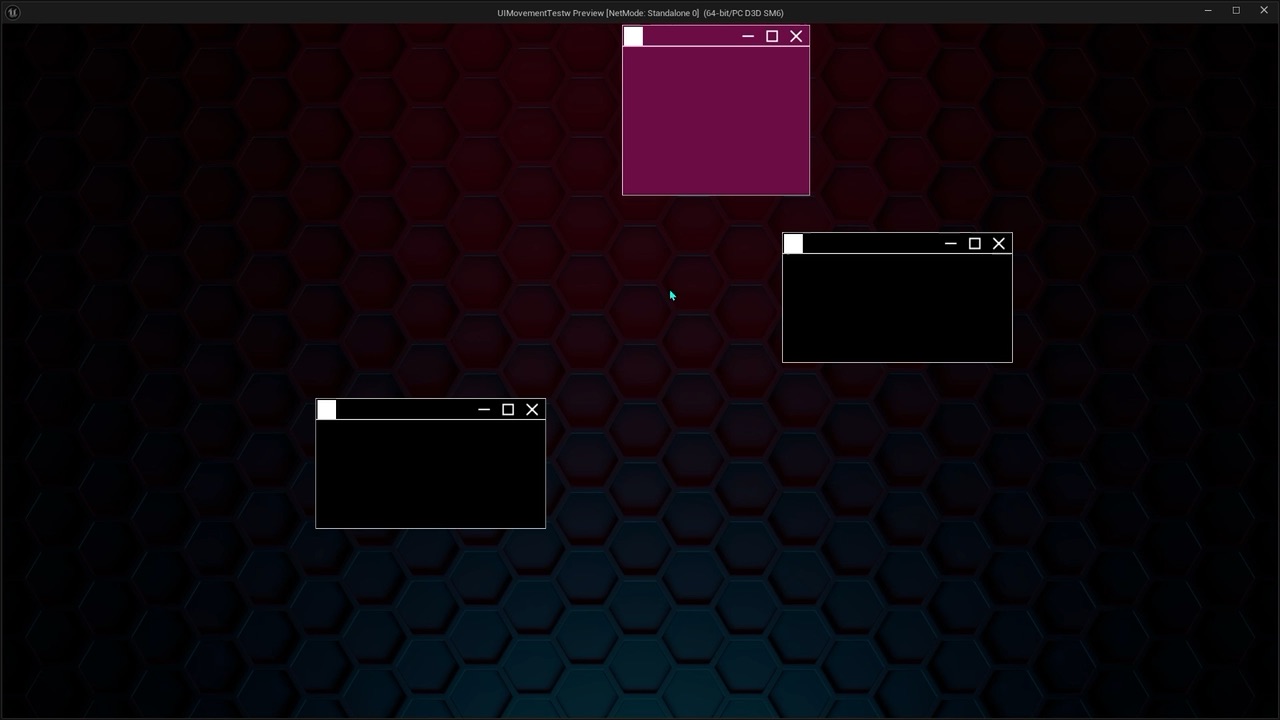
A window-management prototype in Unreal Engine Blueprints. Windows move with velocity and a speed limit, check for collisions, and snap to screen edges and corners, with tunable snap strength and distances.
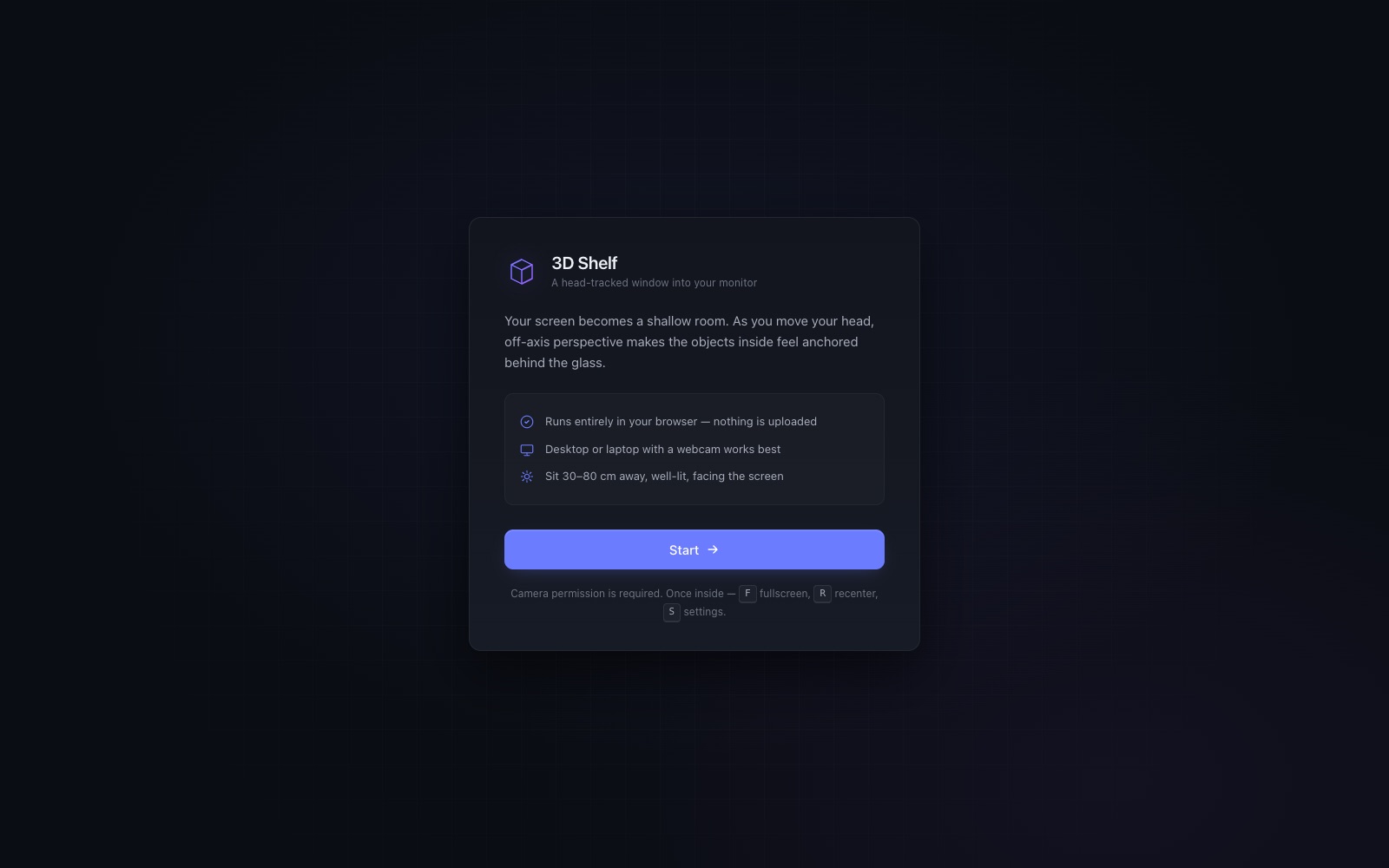
Perspective Fish-tank VR with webcam head tracking
In the browser, webcam face tracking drives an off-axis projection, so the monitor behaves as a window onto a 3D scene that responds to head movement. Builds on work by Ware, Arthur and Booth, and by Deering. All video is processed on-device.